
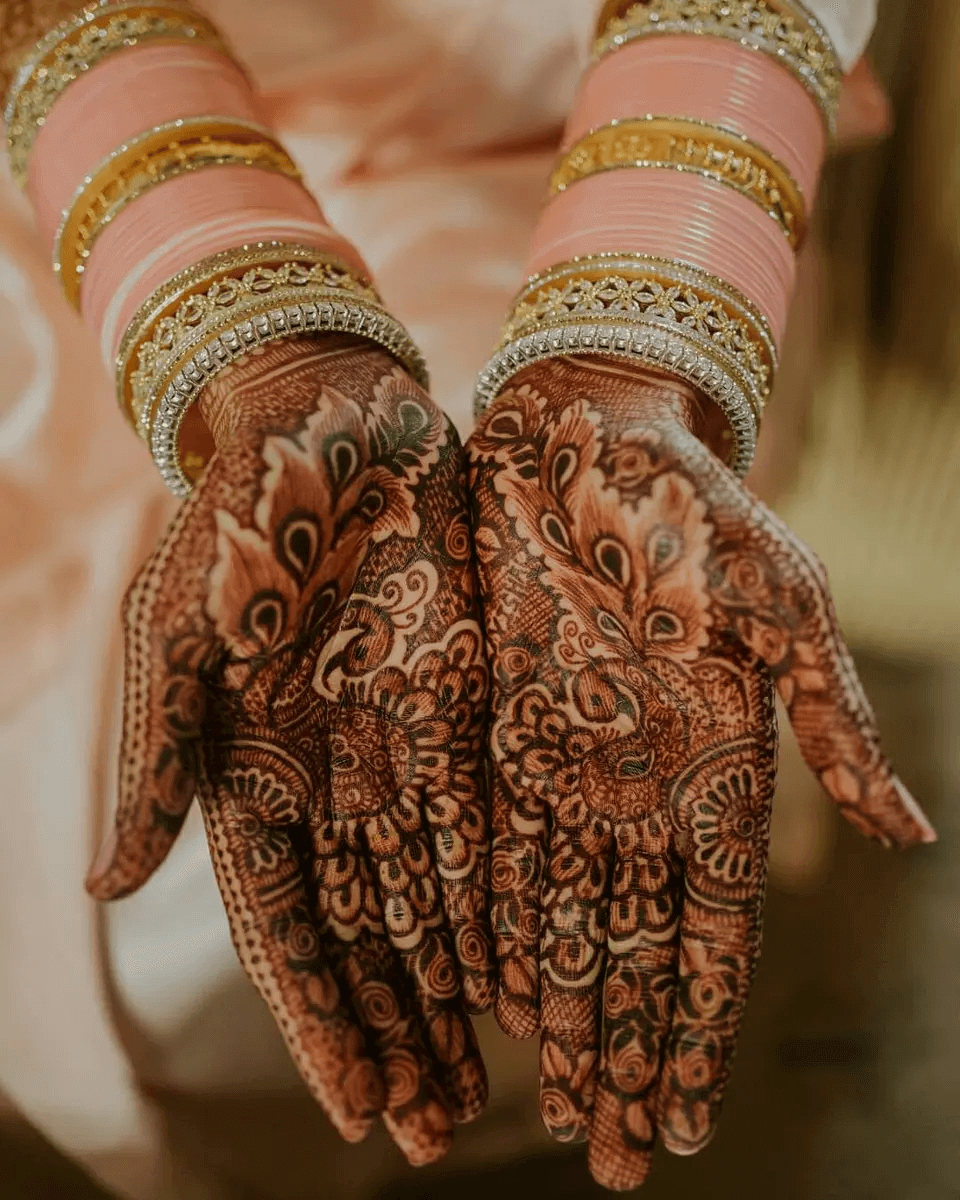
Traditional Mehndi Designs for Wedding
Yuktimmana Bandopadhyay
Wedding expert
Updated 5 Nov 2026
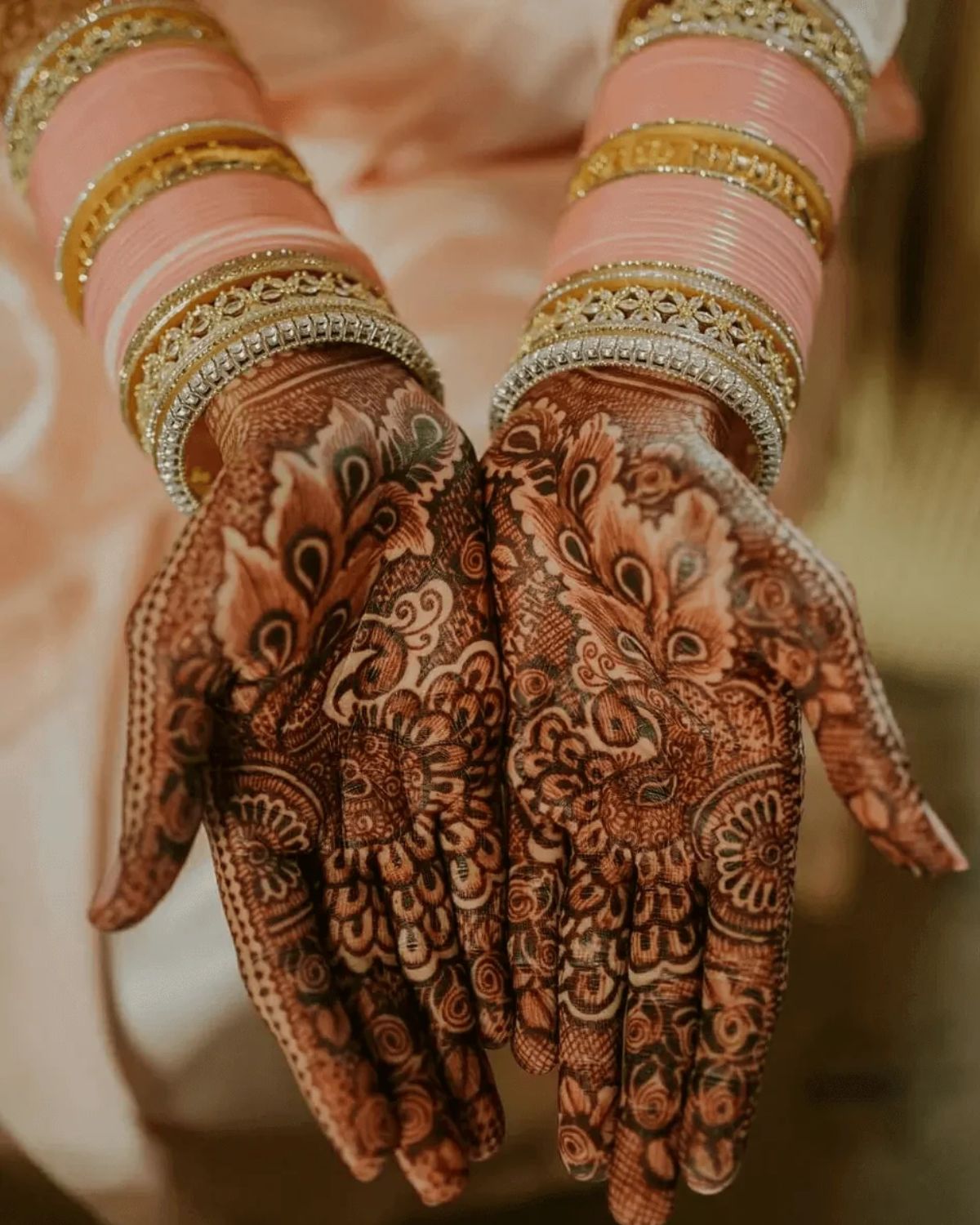
Traditional mehndi designs are the ones your nani would know at a glance. Think paisleys, lotus flowers, peacocks, a big round mandala in the palm and fine jaal work filling every gap. Brides have worn these patterns for hundreds of years, and they still look lovely today.
Below are 14 traditional mehndi designs for weddings. They range from Rajasthani and Bengali to Arabic and South Indian. We've also shared what the common motifs mean, so you can pick one that feels like you.
What Makes a Mehndi Design Traditional?
A traditional mehndi design sticks to old patterns and symbols, not new trends. Most of them share a few things:
A dense, filled-in look (often called bharwa mehndi), with little bare skin
Classic motifs like keri (paisley), lotus, peacock, kalash and doli
Jaal (net) and checks to fill the gaps
Dark, dipped fingertips
Both hands drawn as a mirror image of each other
Traditional Mehndi Motifs and Their Meaning
Each motif in an old design holds a wish for the bride. Here's what the most common ones stand for:
Keri (paisley): good luck and a growing family
Lotus: purity and a fresh start
Peacock: love, beauty and grace
Elephant: wealth, wisdom and good fortune
Kalash: a full and happy home
Doli: the bride leaving her parents' home for her new one
Mandala: balance and peace
Vines and leaves: a long, happy married life
Shankh (conch): luck, and a common sight in Bengali designs
Traditional Mehndi Designs for Hands
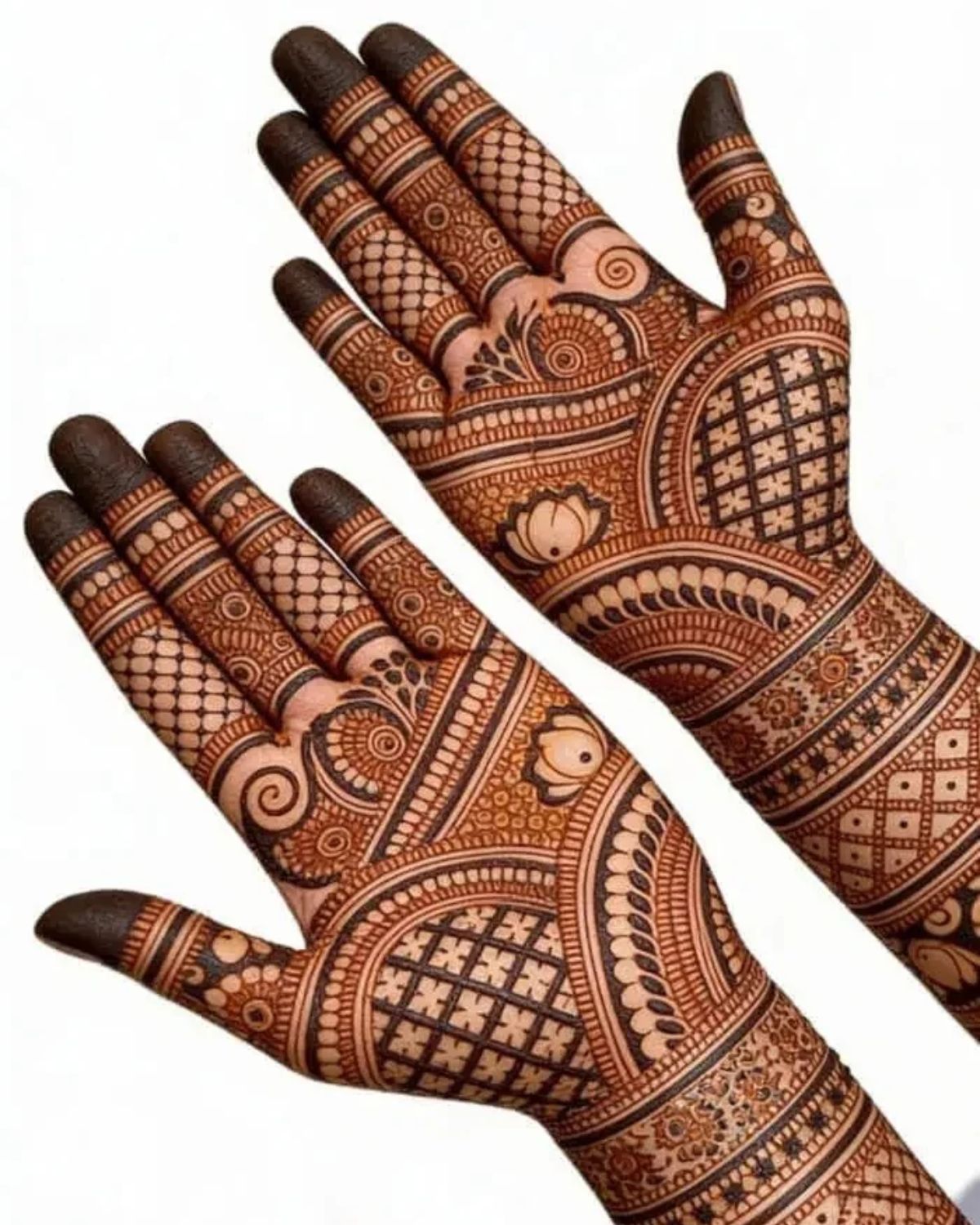
This is the classic front hand layout. An arch sits near the wrist. The palm is filled with checks and small lotuses, and each finger gets its own band. The fingertips are dipped dark.
It's easy to follow, neat in photos and works for brides and guests. If you're just starting to look at bridal mehndi designs, this is a safe place to begin.
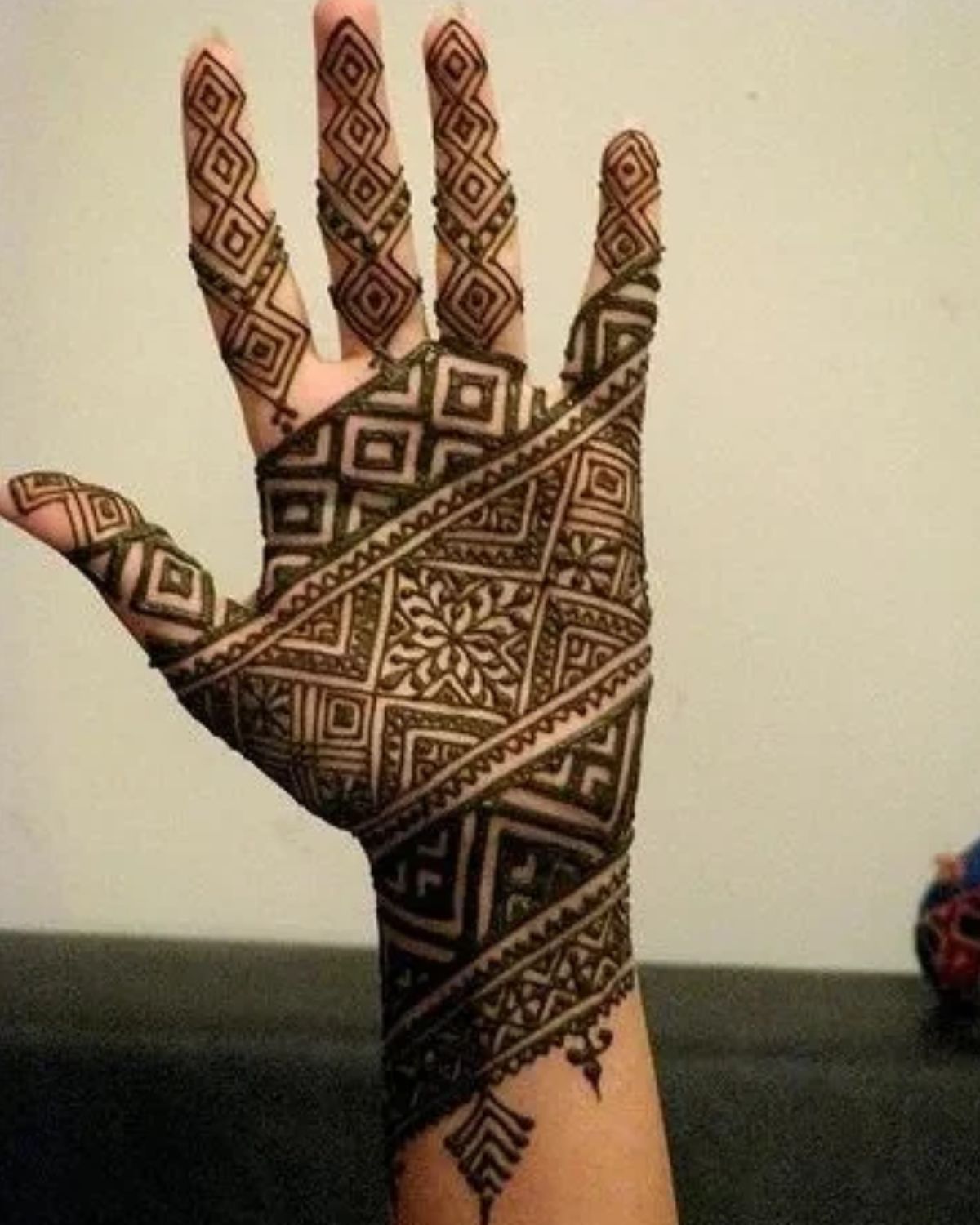
Traditional Moroccan Mehndi Design for Front Hand
Moroccan henna comes from North Africa. There, it was drawn to bring luck and keep bad things away. It uses straight lines, diamonds and tiny squares, often in one wide band that cuts across the palm.
Choose it if you want an old style that still looks clean and sharp. It also goes on faster than a heavy Indian design.
Simple Traditional Mehndi Designs
Traditional doesn't have to mean heavy. Here, one line of flowers and leaves runs from the fingers down to the wrist. A few finger bands finish it. The rest of the hand stays bare.
Simple traditional designs are great for haldi, the roka or Karwa Chauth. They're also handy if you don't want to sit for hours. Find more ideas in our simple mehndi designs guide.
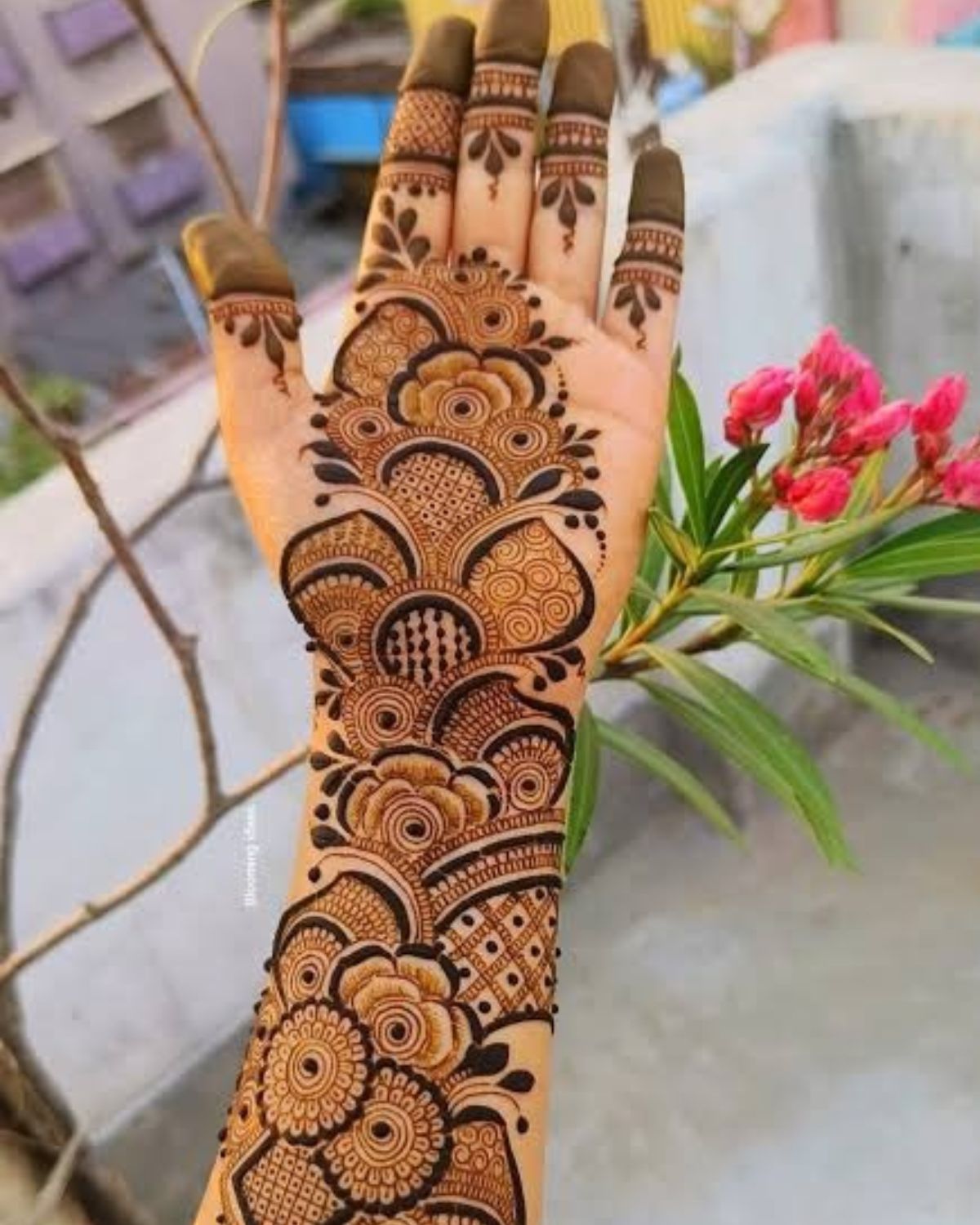
Traditional Hindu Mehndi Designs
Hindu bridal mehndi is full of holy symbols. You'll often see lotuses, kalash, peacocks, the swastik and Om. Most have a mandala in each palm. Some brides also add Radha-Krishna or Shiv-Parvati on the forearms.
These designs usually cover the hands and arms, front and back. Browse our full hand mehndi designs if you want an even fuller look.
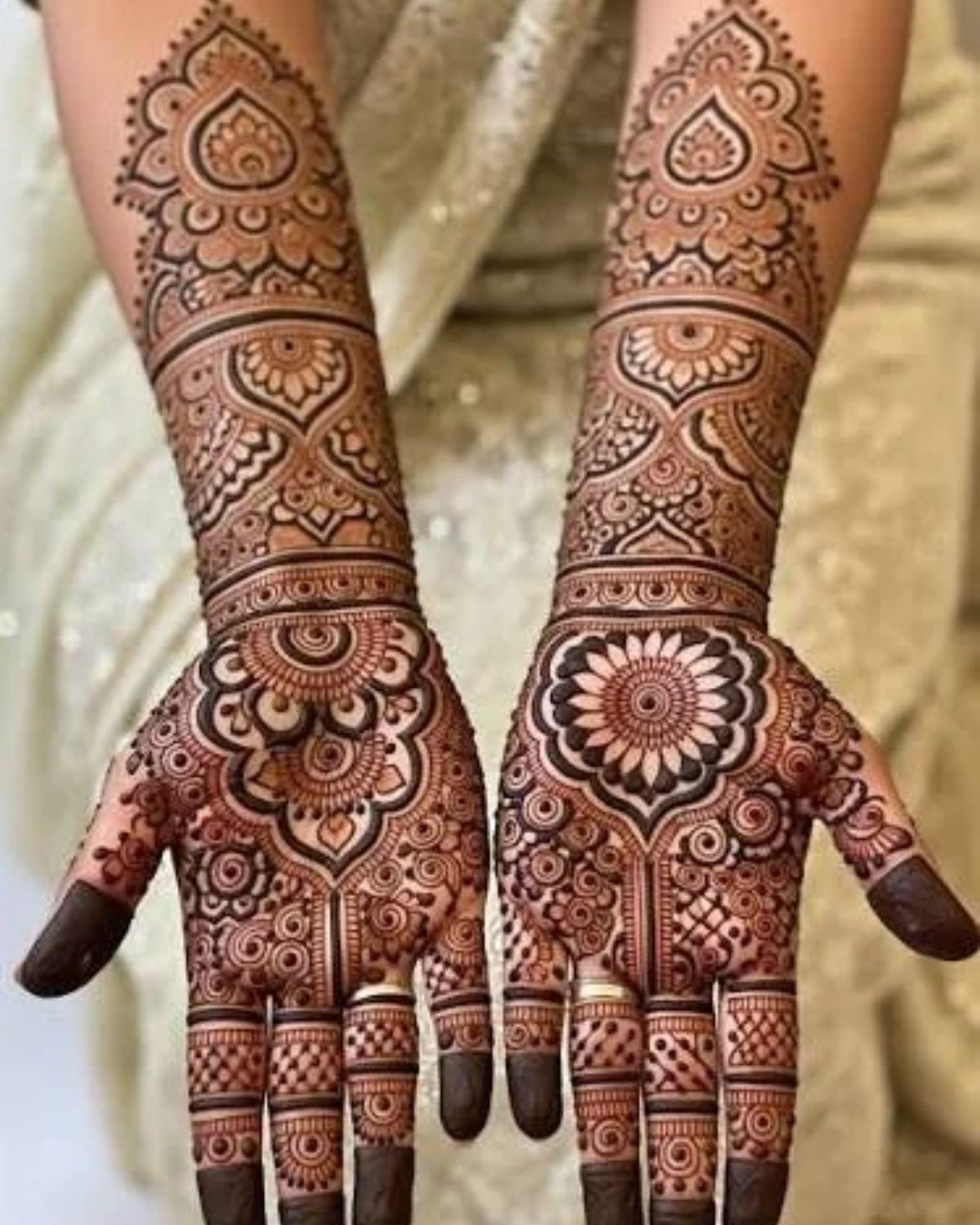
Traditional Islamic Mehndi Designs
Islamic mehndi tends to leave out people and animals. It uses vines, flowers, shapes and, at times, Arabic script. Crescent moons and stars are popular too, especially at Eid.
Many keep the palm light and add chain-like drops at the wrist, like this one. It's a graceful choice for the nikah, mehndi night or Eid.
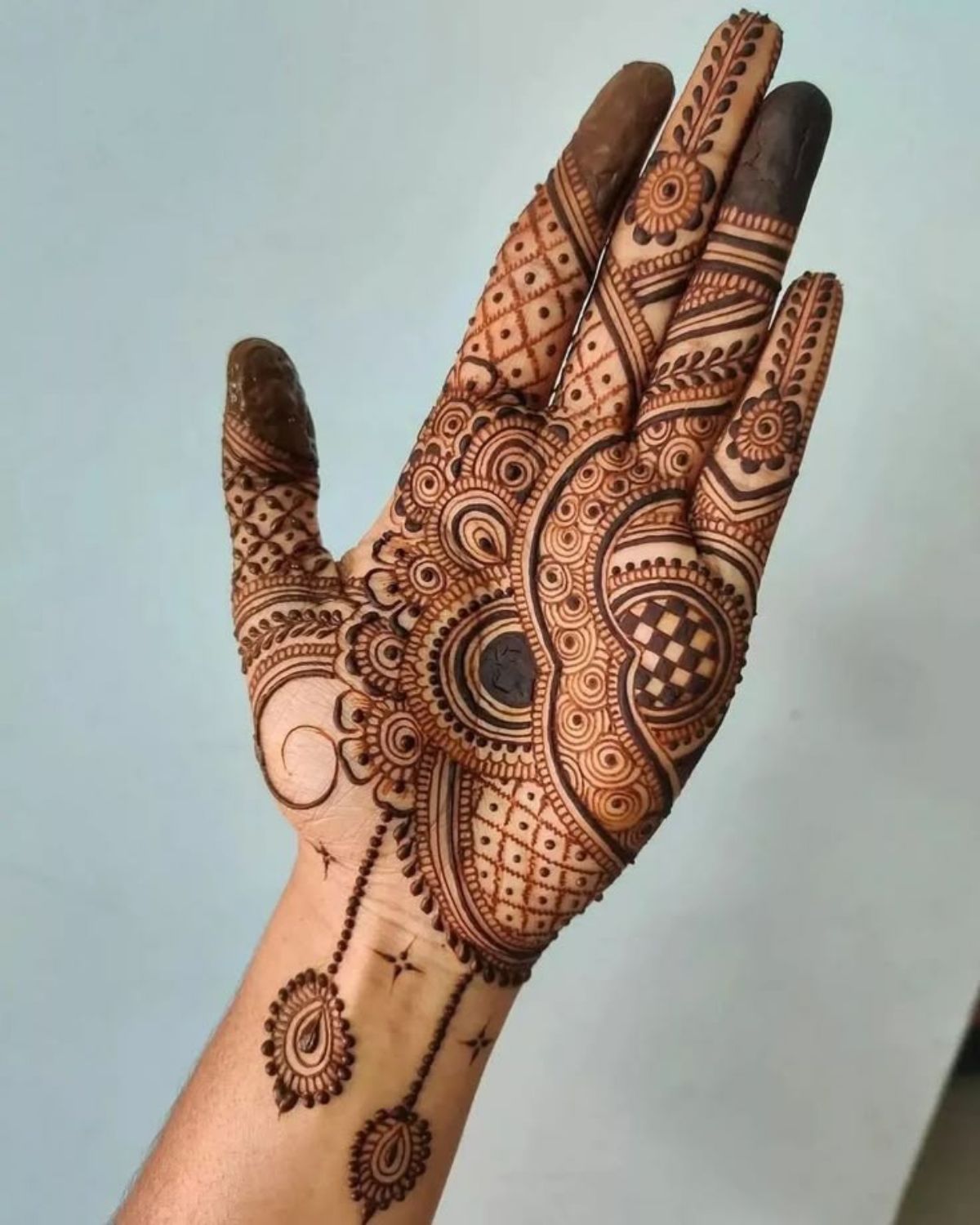
Traditional Pakistani Bridal Mehndi Designs
Pakistani bridal mehndi mixes the flow of Arabic style with fine Indian detail. The outlines are bold, but the inside is packed with fine lines, tiny paisleys and soft shading. The pattern often runs in a diagonal band with neat gaps.
The tiny details are what make it special, so look for an artist with a steady hand. For lighter versions, see these Arabic front hand designs.
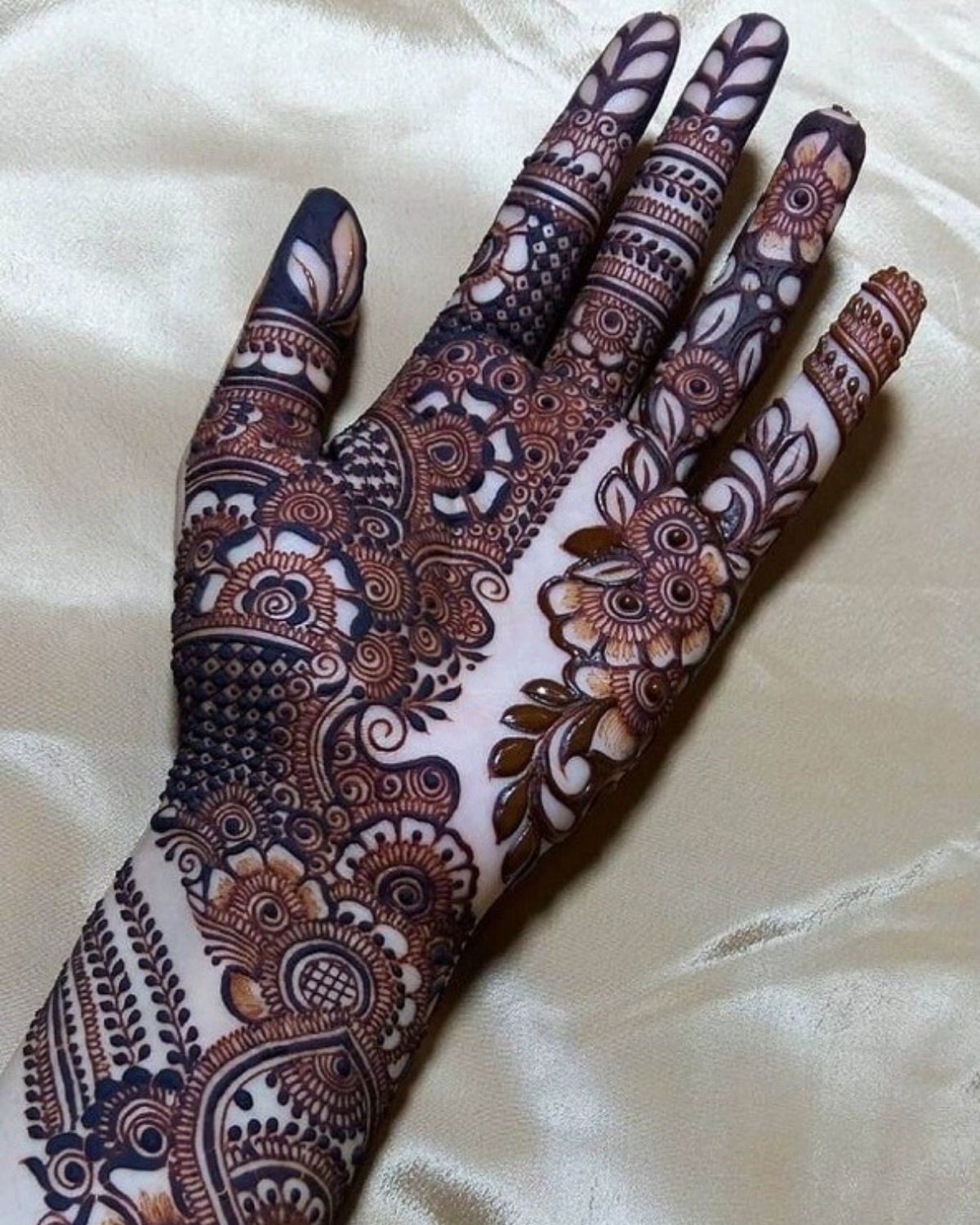
Traditional South Indian Mehndi Designs
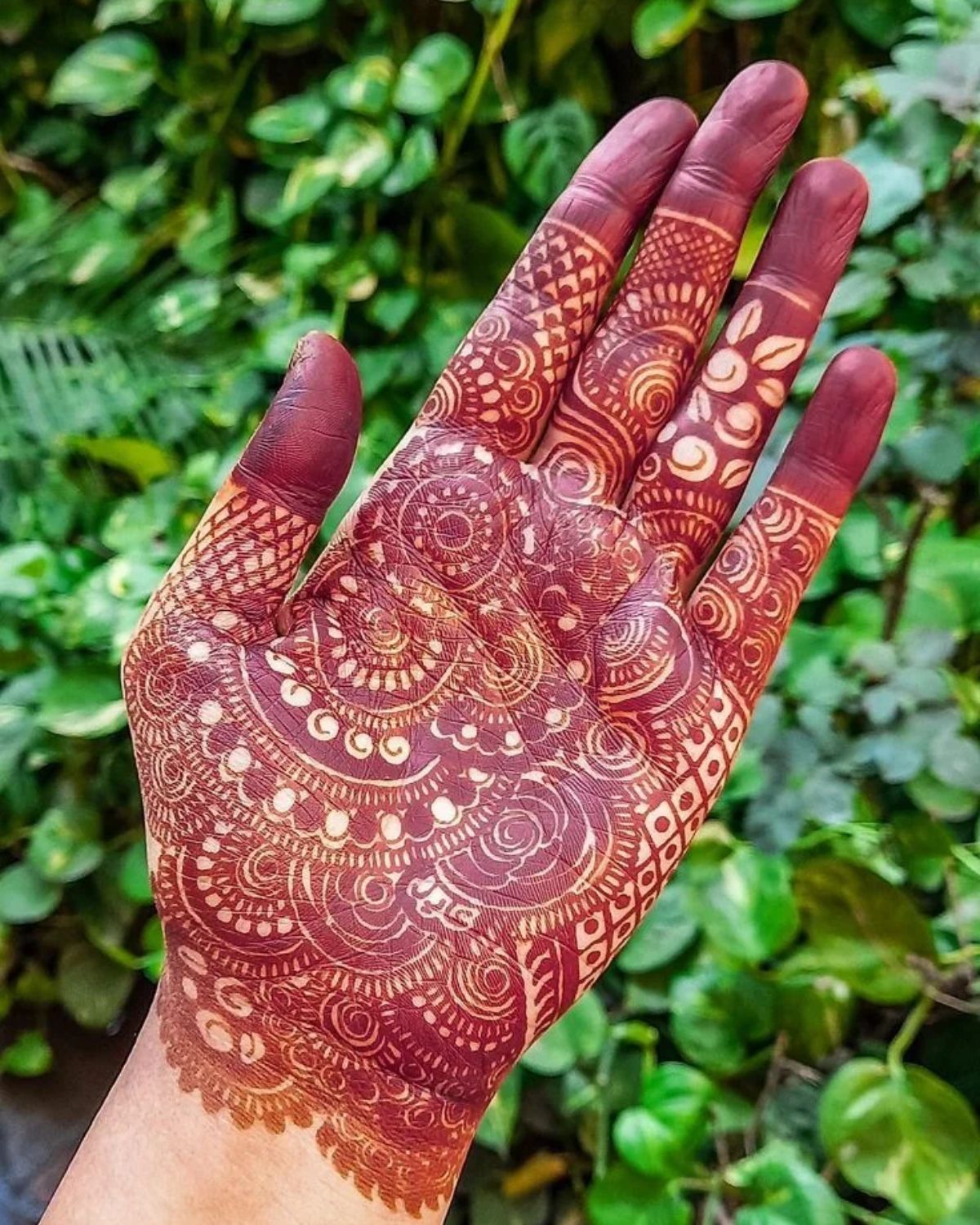
In the south, mehndi has its own roots. Many Tamil and Telugu homes still grind fresh maruthani or gorintaku leaves into a paste. The classic look is a large round dot in the palm with fully covered fingertips.
Now, many brides add temple arches, mango shapes and peacocks around that circle. The colour is often a warm orange-red, as you can see here.
Traditional Arabic Mehndi Designs
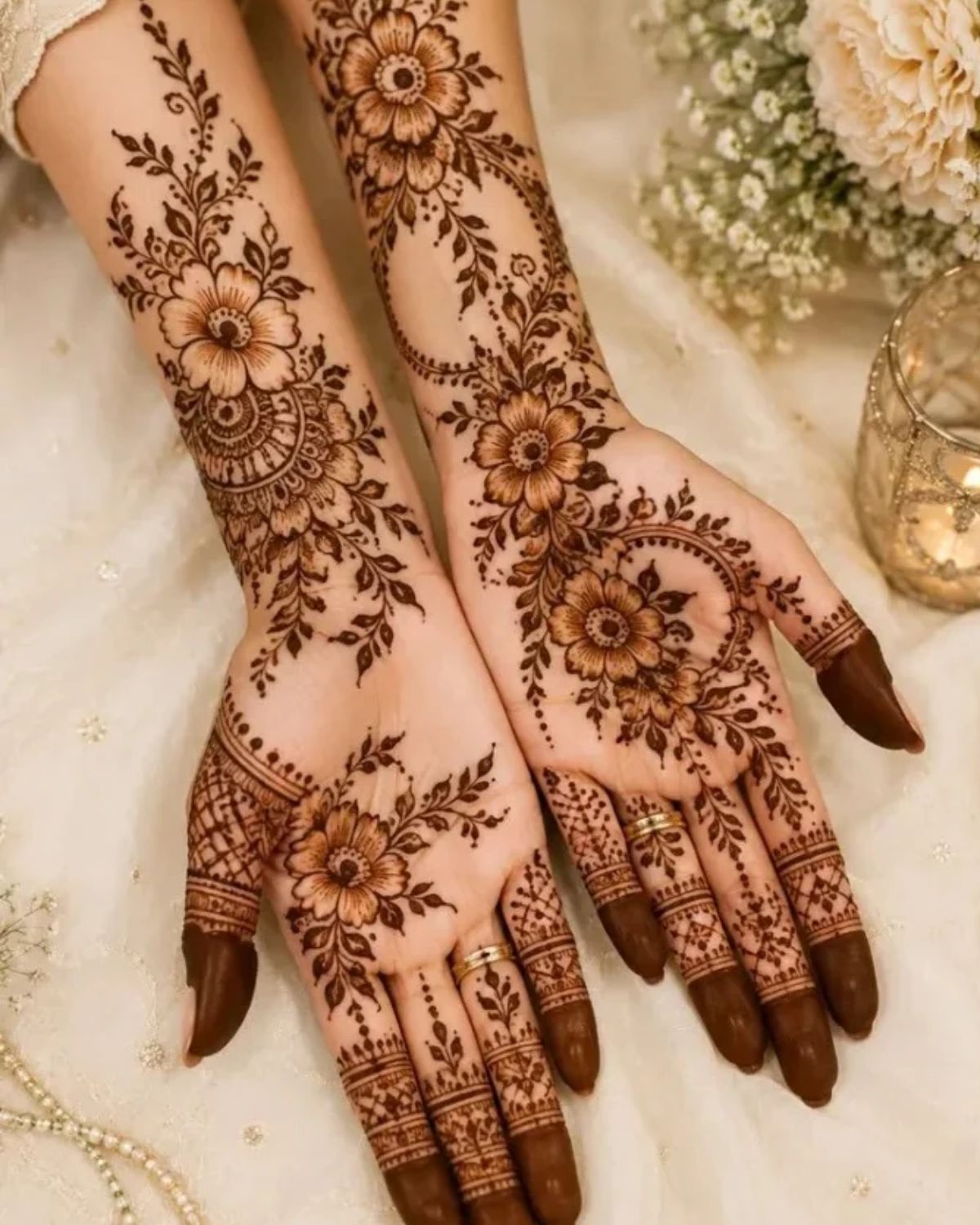
Arabic mehndi uses big, bold flowers and leaves. They trail across the hand in one long line. There's plenty of open skin, which gives it a light and airy feel.
It suits brides who want a lighter look, and bridesmaids love it too. You'll find many more in our Arabic mehndi designs collection.
Traditional Circle Mehndi Designs
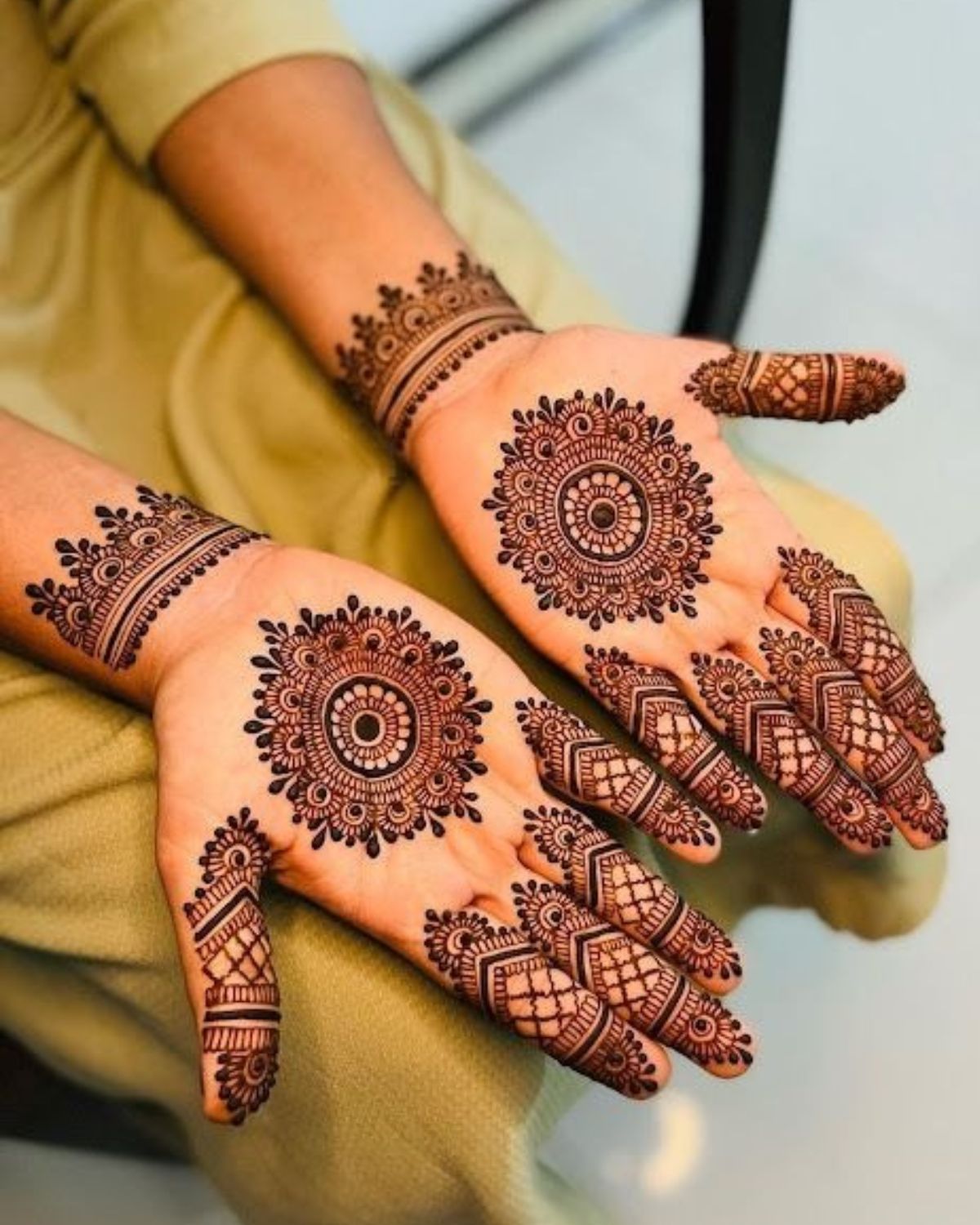
The round palm design, or gol tikki, is one of the oldest mehndi patterns around. Today it often grows into a big mandala, with rings of petals that spread out from the centre. The fingers get checks or bands to match.
It's quick, neat and looks good from every angle. Lots of women wear it for festivals and family events too.
Royal Traditional Bridal Mehndi Design
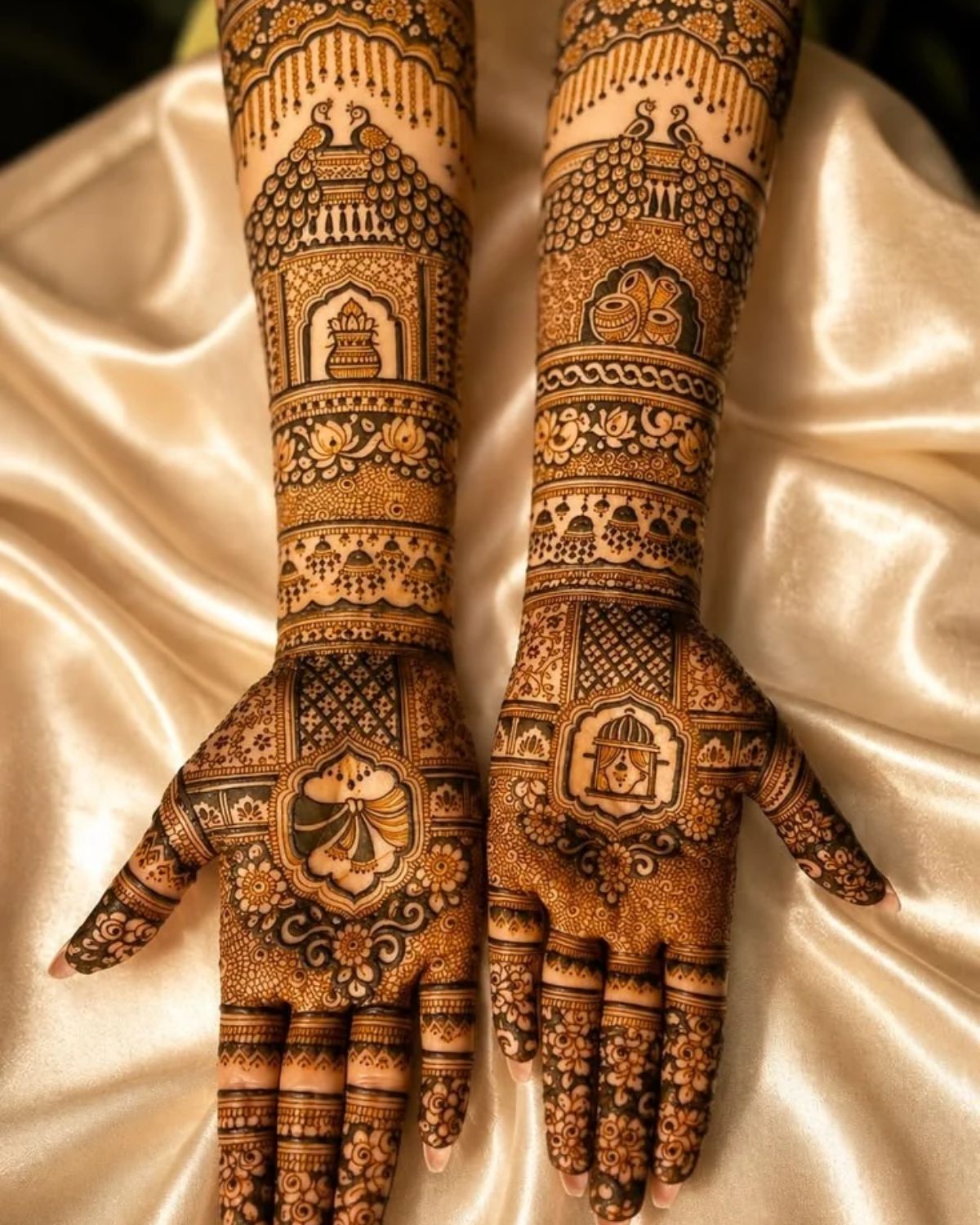
This is mehndi at its grandest. The arms show palace domes, jharokha windows, peacocks and royal figures. Every inch is filled, from the fingertips to the elbows.
A royal design can take most of a day, so book a skilled artist early. Wear it with a heavy lehenga and polki jewels for the full royal look.
Traditional Rajasthani Mehndi Designs
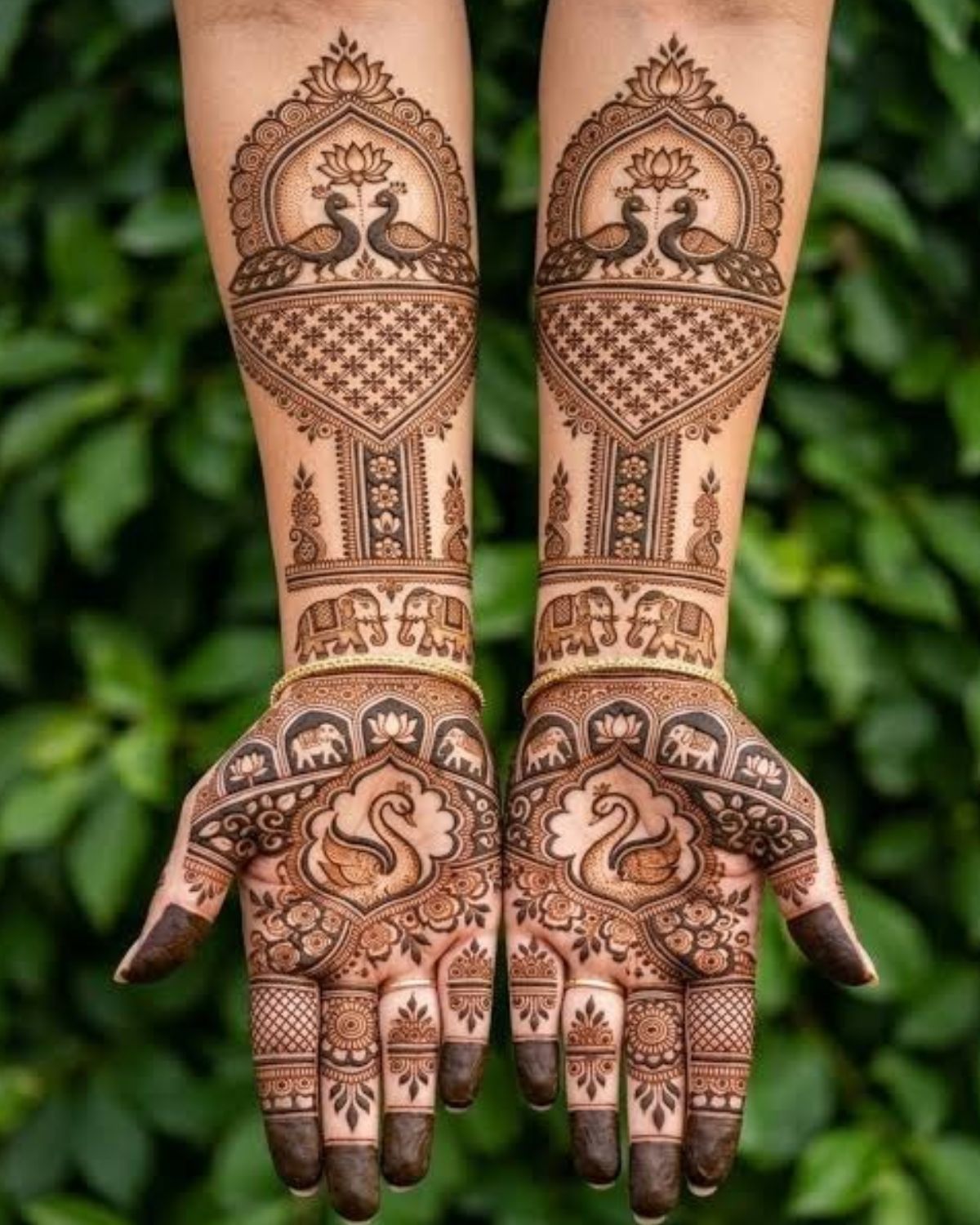
Rajasthani mehndi is known for its very fine lines. Look closely and you'll spot peacocks, elephants and swans. Temple arches and fine jaal frame them.
The style grew out of Rajasthan's royal and Marwari homes. Brides there still wear it with pride. It needs a patient artist and a bride who can sit still for a long time.
Indo-Western Back Hand Mehndi Design
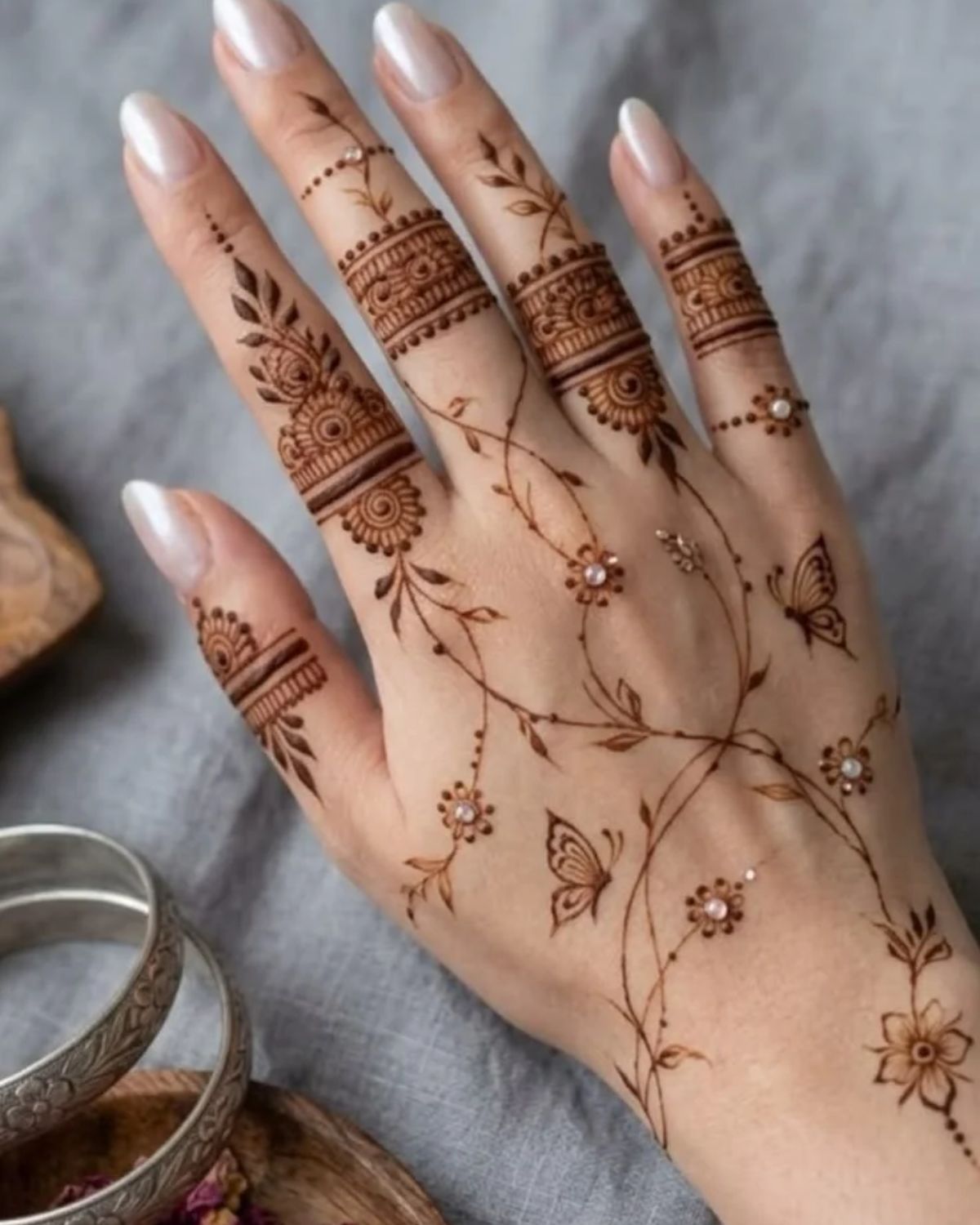
This style takes old motifs and uses them lightly. A thin vine winds across the back of the hand, with small flowers, dots and a few finger rings. It looks almost like fine jewellery.
It's perfect for a cocktail night, a reception gown or a beach wedding. For more ideas, see our back hand mehndi designs.
Traditional Bengali Mehndi and Alta Designs
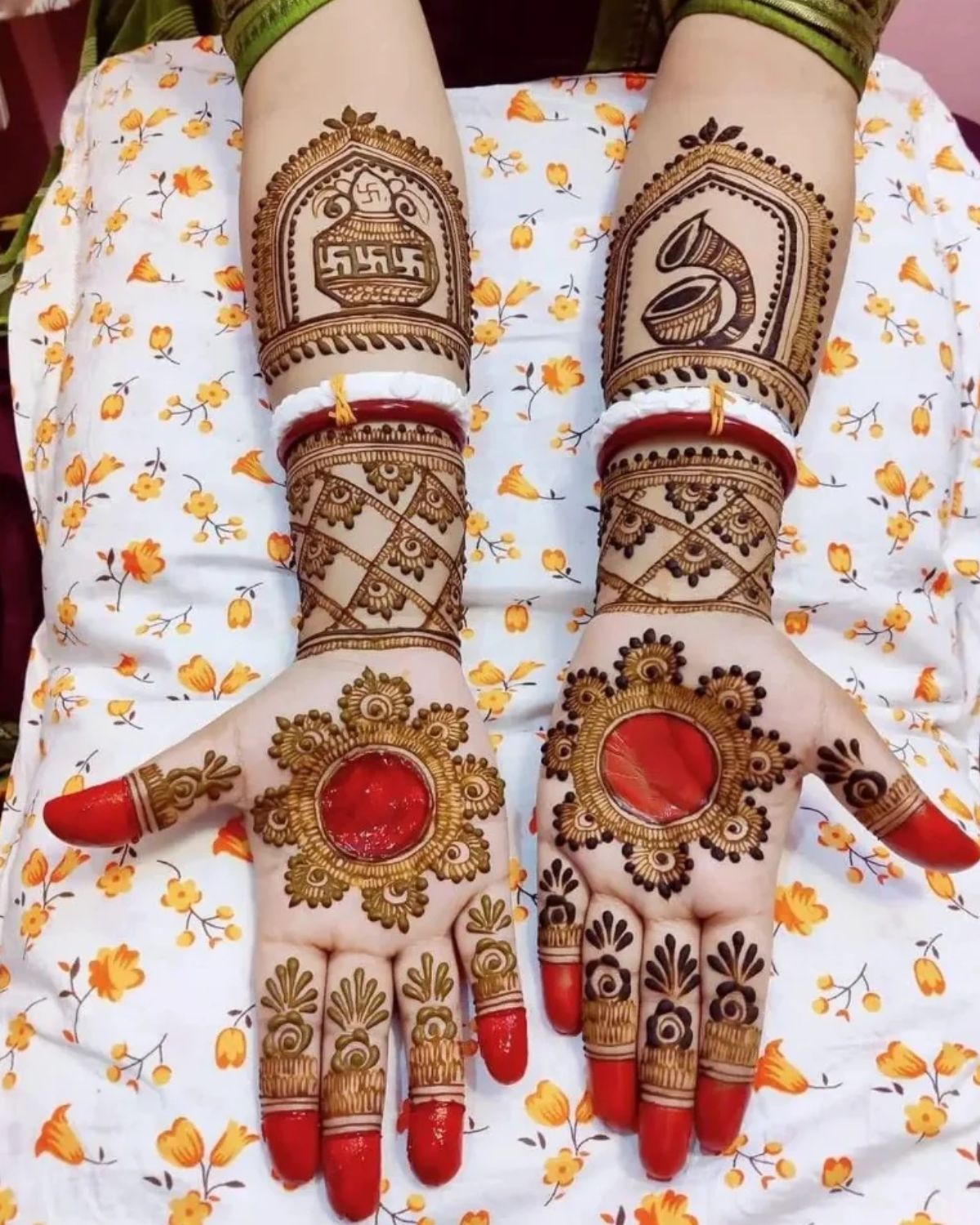
Bengali brides often pair mehndi with alta, the bright red dye painted on the hands and feet. Here, red circles fill the palms and fingertips. The mehndi shows a kalash and a conch.
Both symbols bring luck at a Bengali wedding. The red and white bangles complete the look.
Traditional Floral Mehndi Designs
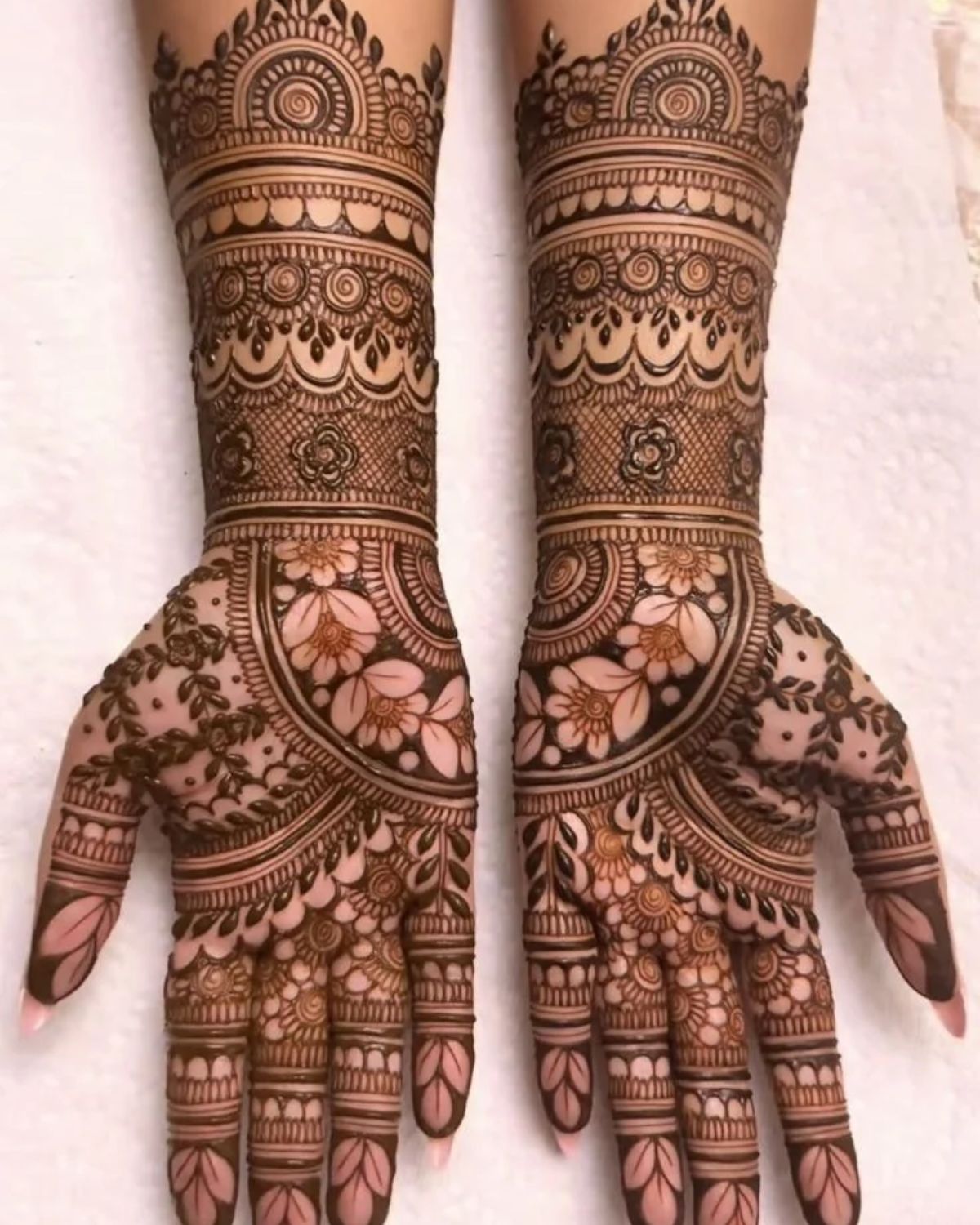
Flowers have always been part of mehndi. This design mixes shaded roses and lotus petals with bands of fine lines up the arms. Leaf shapes on the fingers finish it off.
Floral mehndi goes with any outfit and any event. You can also make it heavy or light, based on how much time you have.
How to Pick the Right Traditional Mehndi Design
Follow your family's customs. Ask the elders if there's a motif your family always uses.
Match the event. Go for royal or Rajasthani designs on the wedding day. Circle, floral or simple styles work for the rest.
Think about time. A full bridal design can take five hours or more. A simple one may take under an hour.
Decide on front or back. Front hand designs show in rites like the kanyadaan. Back hand designs show off rings and bangles. See our front hand mehndi designs for more.
Book a trial. It tells you how the design looks on your hands and how dark the colour gets.
Final Thoughts
These designs have stayed with us for so long because they mean something. Each lotus, peacock and paisley holds a wish for the bride's new life. Pick the style that feels closest to your roots, and let your artist add a few small touches of your own.
You've made one decision. About forty to go.
Venue, date, budget, guest list — one expert takes all of it from here.
Peak demand venues
Frequently Asked Questions
Related reading
 Mehndi Design9 min read
Mehndi Designs for Kids - 100+ Simple, Easy and Cute Ideas
 Mehndi Design9 min read
100+ Trending and Simple Leg Mehndi Designs for Everyone!
 Mehndi Design4 min read
Best Bridesmaid Mehndi Design - Latest & Trending
 Mehndi Design7 min read
50+ Back Hand Mehndi Designs - Latest & Trending